Learn how serviced apartment operators can connect systems, reduce manual admin and automate booking to service with one tailored operating platform the business.
Serviced-apartment operators reservations automation software: What Breaks Daily
Serviced-apartment operators reservations automation software should connect bookings, people, communications and reporting in one reliable operating flow.
Serviced-apartment operators face recurring operational breakdowns that disrupt smooth service delivery and business growth. Reservations, cleaning schedules, maintenance requests, guest communications, and billing are often managed via isolated spreadsheets, email threads, and disparate software. This fragmentation causes inaccuracies, delays, and miscommunications, which cascade into more serious issues such as double bookings, missed housekeeping, misunderstood guest needs, and inconsistent billing.
Because each department or function works from separate systems or manual processes, important information rarely flows seamlessly through the business. Staff waste time reconciling records and chasing overdue tasks. Guests face last-minute surprises or delayed responses. Performance visibility is limited, making it hard for managers to spot bottlenecks or compliance risks quickly.
This fragmentation is not just an inconvenience; it undermines operational efficiency and guest satisfaction and puts revenue at risk. Many operators lack a connected reservations automation solution tailored to how their business actually runs. The need to keep useful legacy systems while replacing unnecessary software subscriptions is critical, but achieving a single source of truth and orchestrated workflows remains a challenge.

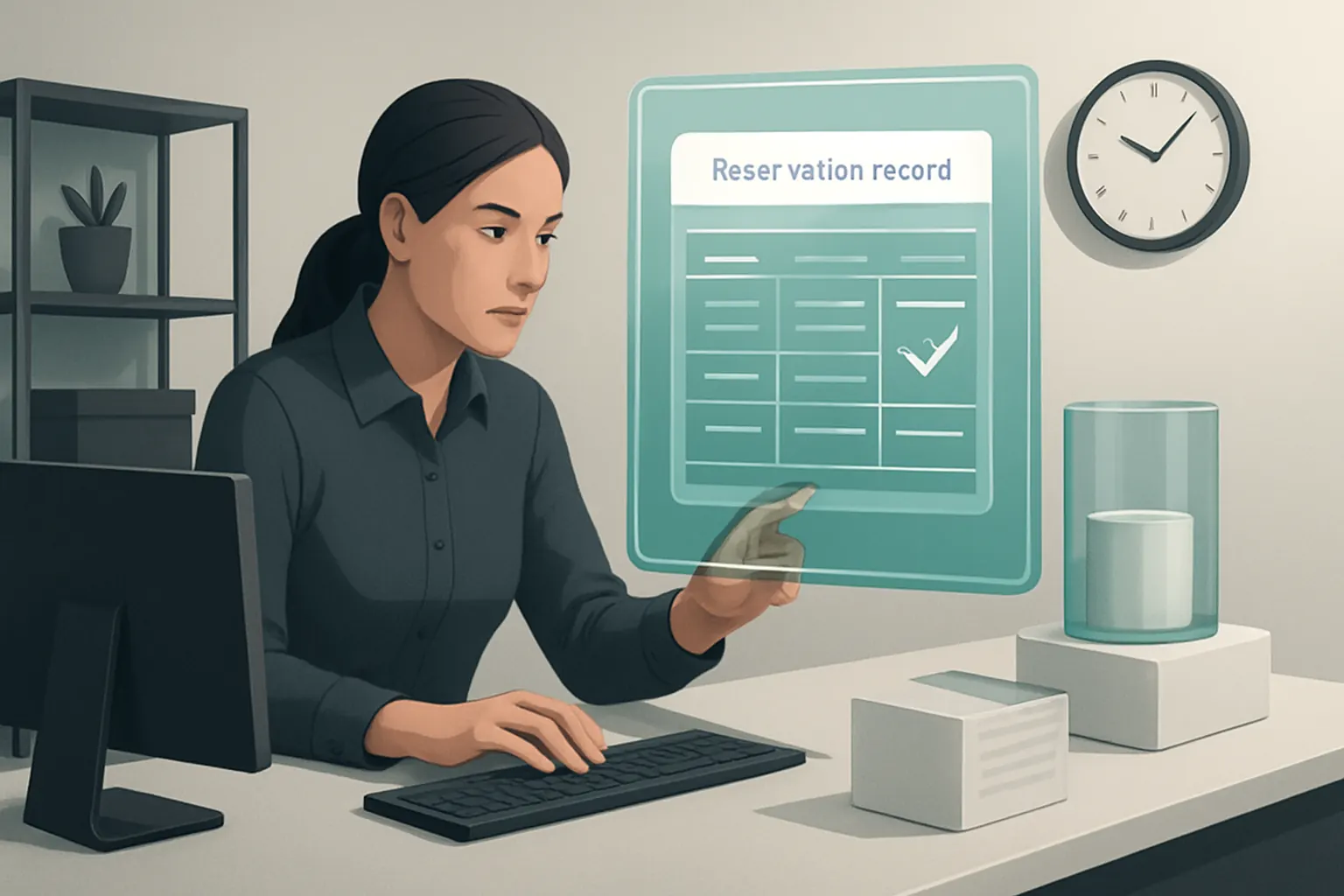
Streamlining Booking to Service Automation for Serviced-Apartment Operators
Booking Workflow Breakdown Affecting Daily Operations
Booking is the frontline process. Paper-based or isolated booking systems cause delays reconciling guest details with availability, pricing updates, and payment confirmation. Staff must duplicate effort between booking platforms and housekeeping or maintenance, resulting in missed or late service delivery.
Connecting Booking Records to Orchestrated Services
A connected system automates the flow of booking data to all relevant teams. Once a reservation is confirmed, notifications and task assignments cascade automatically — cleaning rosters update to reflect arrival and departure times, maintenance is alerted to prepare units as needed, and guest communication schedules are triggered without manual intervention.
Integrating Useful External Tools
Payment gateways and communication platforms like Stripe or Twilio can remain integrated. They perform specialist functions such as card processing and SMS notifications while syncing bi-directionally with the owned booking record to protect data consistency and security.
Example in Practice
A guest books an apartment via a website or phone. The reservation system immediately creates tasks for housekeeping with all guest preferences visible. The guest also receives automated arrival instructions and payment reminders. At check-out, the system queues a post-stay review request—closing the loop without staff action.
Managing Controls and Approvals
Automated alerts flag exceptions like late payments or special maintenance requests for human review. Pricing rules and discount thresholds are enforced by deterministic logic but final approval on complicated rates or compensations remains with managers, balancing automation with governance.

Replacing Avoidable Software Subscriptions With Owned, Tailored Modules
Daily Frustrations With Multiple SaaS Overlaps
Many operators subscribe to separate tools for PMS, communication, billing, and task management, incurring high fees and data silos. These overlapping subscriptions complicate user training and restrict adaptability as business needs evolve.
Building Owned Components That Fit Business Needs
Developing bespoke modules within a single operating environment replaces costly subscriptions. Operators own their software assets, customising booking management, rota planning, supplier coordination, and billing workflows directly aligned to real-world processes.
Moderating Integration With External Specialist Services
Where specialist solutions like bank payment processors or communications providers offer lasting value, they integrate securely. However, cost duplication and vendor lock-in risks vanish when everyday functions migrate to the internal system.
Practical Implementation Example
An operator cancels a third-party cleaning schedule app when their owned rota module automatically allocates tasks based on bookings and staff availability. They retain existing SMS gateways for guest reminders but manage customised guest communication scripts internally.
Maintaining Control and Security
Data ownership ensures all customer and staff information stays within the operator’s system boundaries. User authentication, role permissions, and audit logs allow compliance with GDPR and hospitality data regulations, with human oversight at critical decision points.
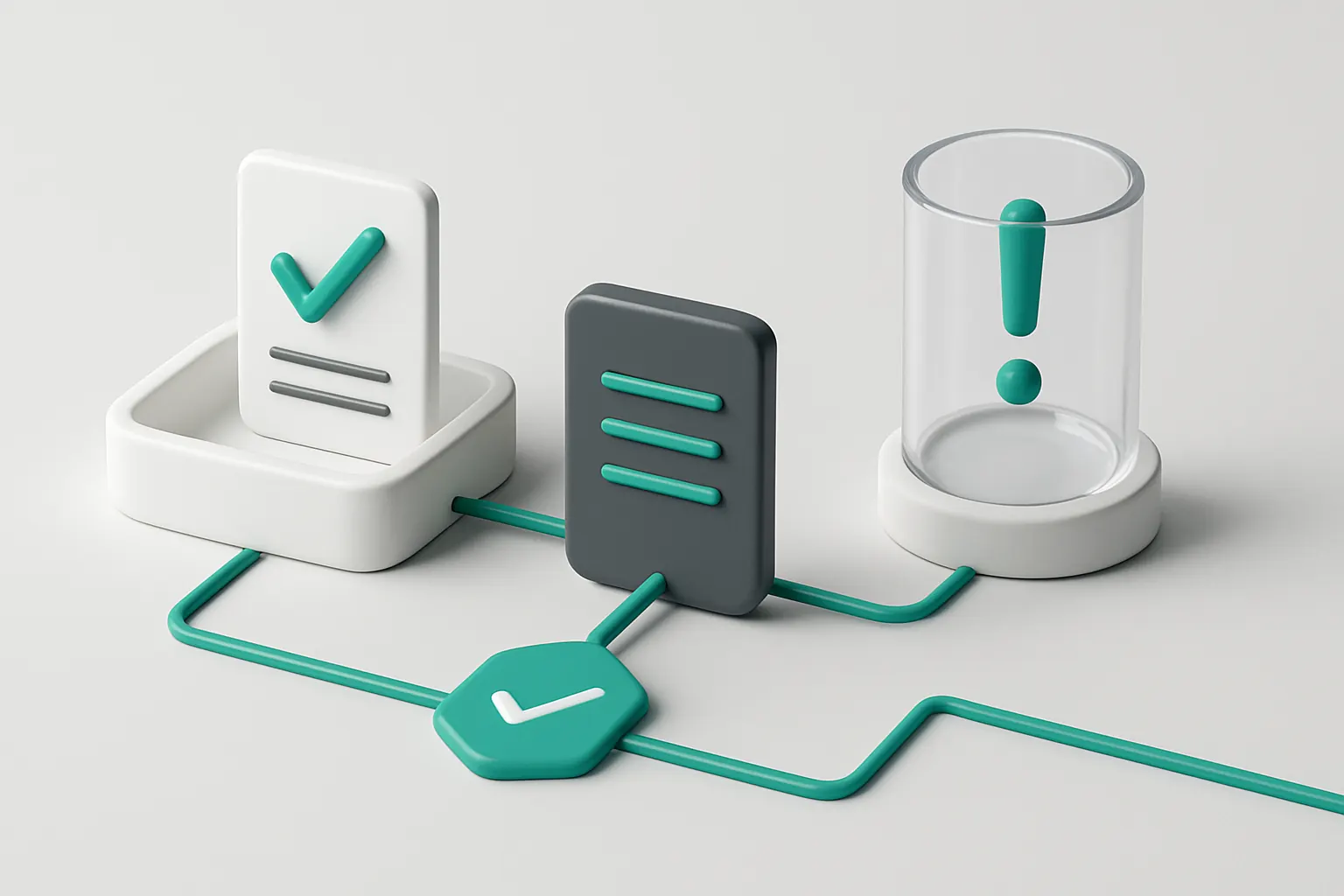
Unifying Operational Data Into One Reliable Record and Dashboard
The Daily Challenge of Fragmented Data
Dispersed booking, housekeeping, maintenance, and billing data prevent a clear picture of asset utilisation, revenue, and service quality. Reports are often compiled manually, increasing errors and lag.
Creating One Source of Truth for Operators
A central record consolidates all operational data in real-time, providing management with dashboards tailored to roles: reservation managers monitor booking velocity; maintenance teams see planned jobs; finance tracks invoices and cashflow.
Incorporating AI & Deterministic Rules for Insights
AI capabilities such as categorising maintenance requests or summarising guest feedback provide additional clarity, while deterministic rules track key performance indicators and compliance checkpoints with human review for exceptions.
Tangible Example: Proactive Maintenance
The system flags apartments with frequent maintenance calls, alerts managers via dashboard KPIs, and schedules preventative visits—all visible alongside guest occupancy data and financial performance.
Governing Data Access and Accuracy
Regular automated data validations reduce discrepancies, while permission-based access limits who can view or alter sensitive information. Controls exist for compliance checking and audit readiness in line with ICO guidance.

Using AI Selectively for Variable and Complex Tasks
What Repetitive Tasks Wear Out Staff
Outcomes like classifying guest messages, summarising housekeeping feedback, or prioritising maintenance tickets often consume precious staff time with unpredictable volume and content.
Applying AI as an Assistive Capability
AI supplements deterministic workflows by handling classification, summarisation, prioritisation, and decision support only where variability makes it efficient. Clear rules automate routine or predictable tasks; humans review results flagged by AI for correctness or sensitivity.
Seamless Integration Within the Owned Workspace
AI models are embedded as modules serving core daily activities, ensuring staff never lose context or data control. For example, AI-generated cleaning priorities feed directly into the rota module, while guest sentiment summaries guide service recovery workflows.
Real-World Scenario: Enhanced Guest Communication
Incoming guest emails or messages are automatically categorised by urgency and topic, enabling staff to respond faster. AI-generated summaries help managers spot emerging issues during peak seasons.
Balancing Automation With Responsible Oversight
Controls require human approval for responses impacting reputation or legal obligations. Operators configure AI sensitivity to avoid risks, continuously review flagged cases, and intervene in data handling to comply with privacy requirements.
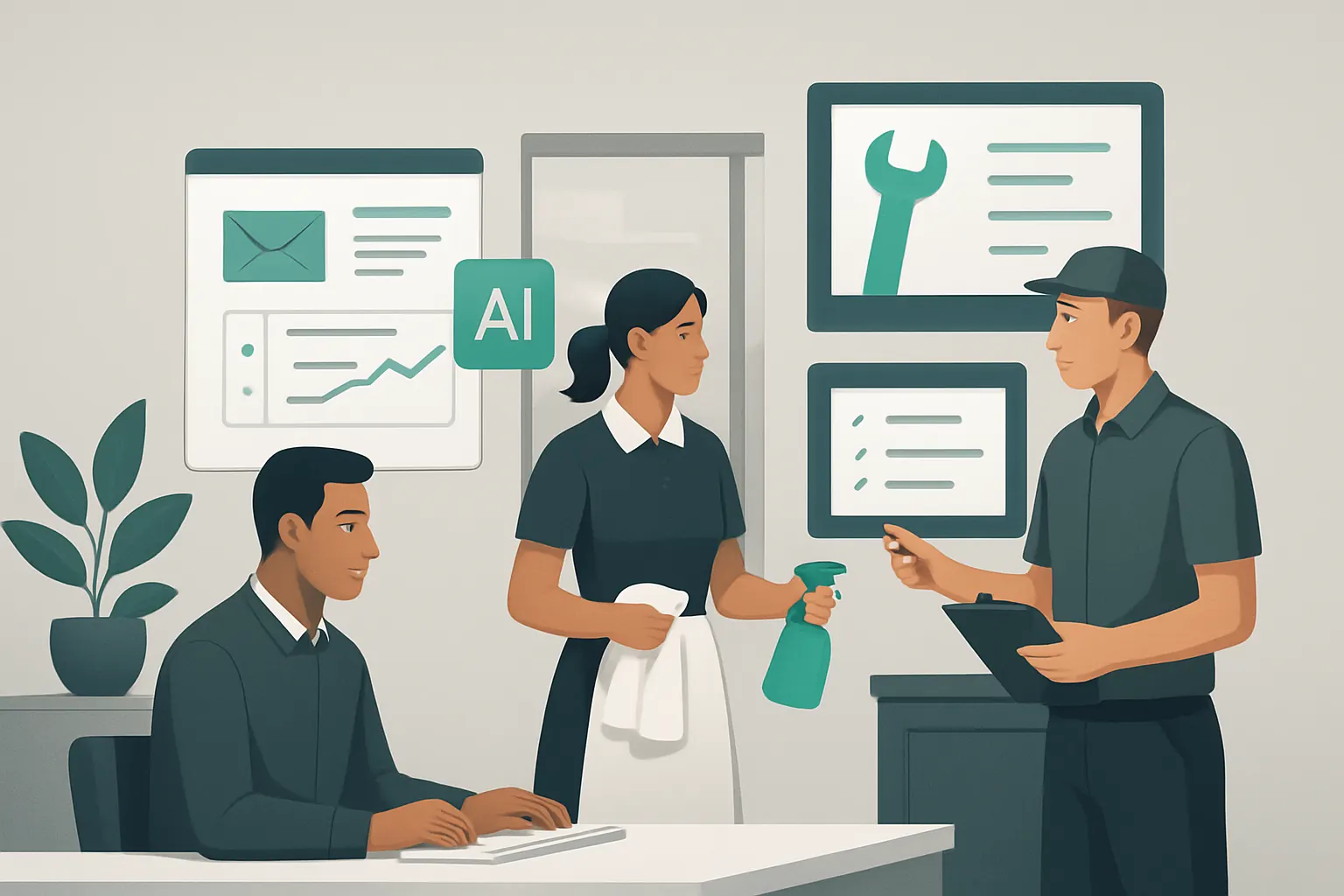
Orchestrating Supplier and Staff Rotas Within a Connected Workflow
The Common Complexity of Coordinating Teams
Scheduling cleaners, maintenance contractors, and support staff is a daily challenge, especially with variable bookings and last-minute changes. Manual roster adjustments add errors and slow response times.
Unified Workflow Connecting Bookings to Service Delivery
Staff rotas and supplier tasks are generated automatically based on confirmed reservations and service needs. Notifications update teams of changes instantly, improving efficiency and reducing missed assignments.
Retaining Necessary Specialist Vendor Connections
Supplier invoicing and approvals stay connected to finance modules, integrating with payment gateways for streamlined cashflow management. Communication tools support instant alerts and escalations.
Practical Example: Flexible Shift Management
The cleaning team receives automated shift plans aligned with check-out times. If a booking is extended, the system triggers alerts to rearrange rotas and update suppliers, ensuring seamless coverage.
Governance of Changes and Exceptions
All rota changes are logged with timestamps and approvals, enabling audit trails. Managers can manually reassign tasks or pause automation temporarily during exceptional circumstances.

Rolling Out Reservations Automation in 90 Days
Weeks 1–2: Discovery and Planning
- Assess current systems and workflows with frontline and management staff.
- Identify critical manual pain points and integration opportunities.
- Prioritise owned modules to develop, including booking, rota, and dashboard needs.
- Establish compliance and data governance protocols aligned with ICO and safety standards.
Weeks 3–6: Development and Integration
- Build core owned components replacing unnecessary subscriptions.
- Connect external specialist tools such as payment processors within secure data flows.
- Configure initial AI capabilities for classification, summarisation, and prioritisation.
- Develop dashboards tailored by role for operational visibility.
Weeks 7–12: Testing, Training, and Transition
- Conduct parallel testing alongside existing workflows to ensure accuracy and reliability.
- Train users across departments on new workflows and controls.
- Refine rules and AI thresholds based on feedback.
- Graduate to full operation with ongoing monitoring and support.

How AI Implementation UK Transforms Serviced-Apartment Automation Through Ownership
At AI Implementation UK, we enable serviced-apartment operators to evolve beyond disconnected systems into a unified, owned workspace. We specialise in designing one connected operating environment that mirrors how your business works, integrating and improving what matters most.
We connect your existing useful systems and replace avoidable SaaS subscriptions with tailored owned modules. Our approach brings operational data into a single reliable record and role-specific dashboards, providing one source of truth.
AI is used selectively and responsibly—as a capability to handle classification, summarisation, prioritisation, and decision support—while deterministic rules govern predictable tasks with human oversight preserving compliance and quality controls.
Our service goes beyond installing new software. We automate your booking to service workflows, orchestrate rotas and supplier coordination, and maintain specialist integrations like payments or communications securely. This produces measurable savings in time and errors, better compliance with privacy and safety regulations (ICO, NCSC), and a consistent, high-quality guest experience.
Explore how our process automation services and data infrastructure preparation support transformation tailored to your operation. Discover how AI roadmapping aligns technology choices with strategic priorities at our AI strategy service.
Make 2026 the year you take ownership of your reservations automation — turning daily operational pain into precision, efficiency, and growth.
To turn these priorities into one coherent system, map the platform your business needs or explore our workflow automation approach.