
Learn how road haulage operators can connect systems, reduce manual admin and automate order to dispatch with one tailored operating platform the business owns.
Road-haulage operators vehicle and driver planning automation software: What Breaks Daily
Road-haulage operators vehicle and driver planning automation software should connect bookings, people, communications and reporting in one reliable operating flow.
Road-haulage operators grapple daily with operational friction points that disrupt efficiency. Jobs fail to link smoothly from order to dispatch. Drivers’ schedules conflict with vehicle availability. Paperwork piles up between booking, load planning, and proof of delivery. Manual data entry increases errors and slows decision-making. Many firms depend on disconnected software tools or spreadsheets incapable of scaling, leading to costly delays, compliance oversights, and reduced visibility.
This fragmentation wastes precious management time on routine admin rather than proactive coordination. The outcome: missed deadlines, frustrated customers, unpredictable cashflow, and safety risks in regulated driver and vehicle management. The industry’s complexity demands a new approach — one that reflects the actual way a road-haulage business works, seamlessly connecting all operational pieces.

The Mounting Costs of Manual, Disconnected Processes
Sticking to traditional, siloed systems or multiple standalone SaaS applications inflates the hidden costs of manual work:
- Time drains: Staff duplicate effort across multiple platforms. Data must be re-keyed between order capture, vehicle planning, driver allocation, and invoicing.
- Error risk: Manual entry errors and misalignments jeopardise delivery accuracy and compliance. Delays in sharing updates cause unnecessary disruptions.
- Compliance exposure: Managing tachograph downloads, DVSA reporting, and regulated goods documentation manually increases the risk of audit failures and penalties.
- Cashflow impacts: Billing delays and reconciliation difficulties arise when proof of delivery and job completion data are fragmented.
- Over-subscription: Paying for overlapping or redundant software modules leads to inflated monthly costs without meaningful process integration or data centralisation.
A fundamental shift is needed to replace these costly inefficiencies with a connected, owned record and workflow that reduces manual steps, automates routine checks, and delivers operational control.
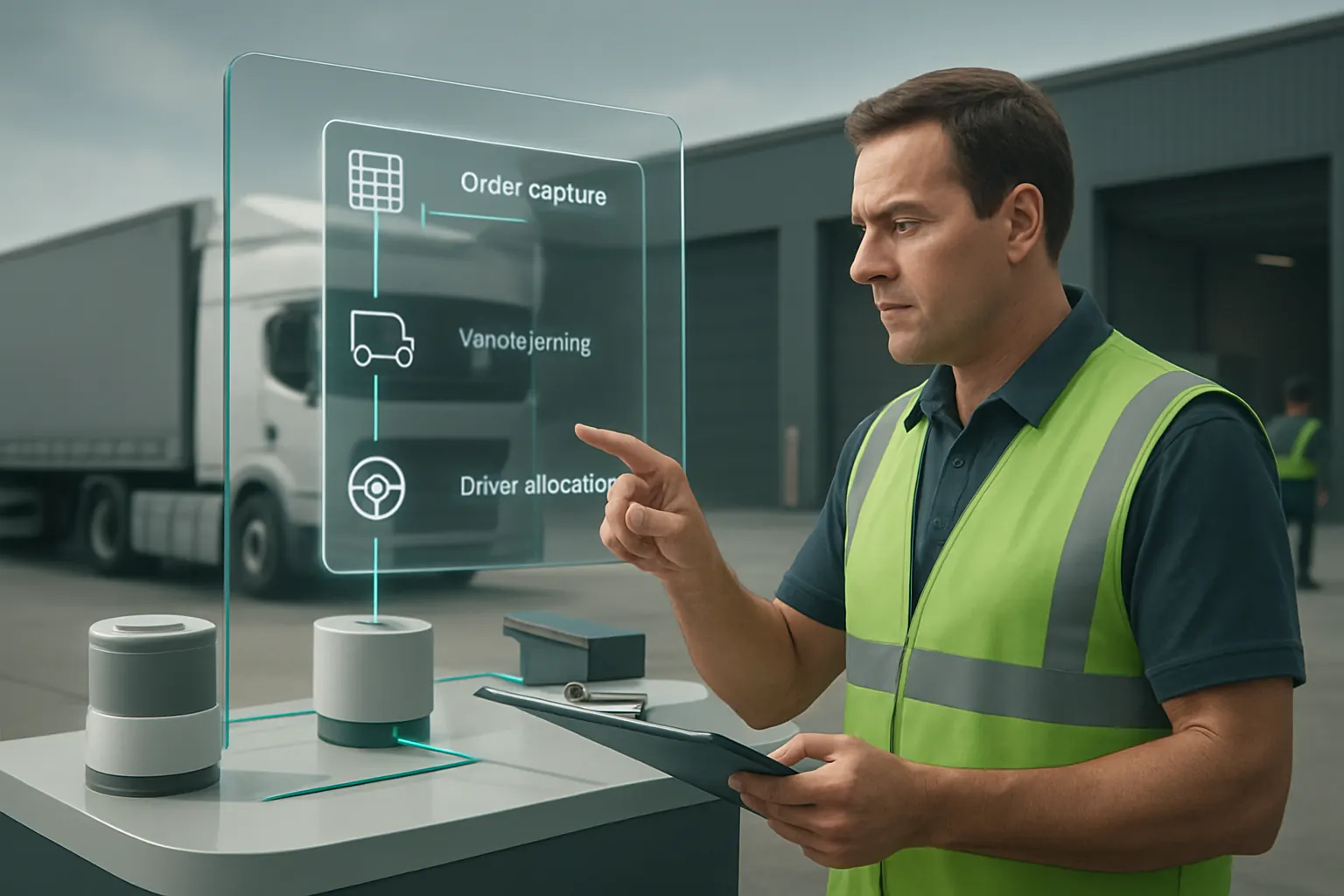
Streamlined Bookings Connected to Capacity and Driver Availability
Immediate Booking Challenges in Road-Haulage
Operators often collect orders via phone, email, or third-party portals. These inputs fail to sync directly with driver and vehicle rosters, requiring manual aggregation and adjustment.
Connecting Order Capture to Resource Allocation
Using one owned system where booking records connect dynamically to vehicle and driver availability eliminates duplication. This creates a single source of truth for scheduling, reducing missed planning conflicts and enabling proactive load consolidation.
Integrations That Add Value
- Existing booking portals can feed data into the owned system via APIs.
- Driver management and tachograph hardware software remain integrated.
- Named payment gateways, like Worldpay or Stripe, can handle upfront deposits linked to each booking.
Tangible Example in Practice
A regional haulier receives an urgent delivery request mid-shift. The booking instantly updates the rota module, showing available drivers and trucks before job confirmation. This cuts response time by hours and improves customer communication.
Governance and Controls
Role-based permissions limit who may manually override availability. Automated alerts flag capacity overloads and regulatory limits on driver hours for review. Audit trails record all schedule changes for compliance purposes.

Automated Route and Load Planning with Realistic Constraints
Route Planning Frictions for UK Fleet Operators
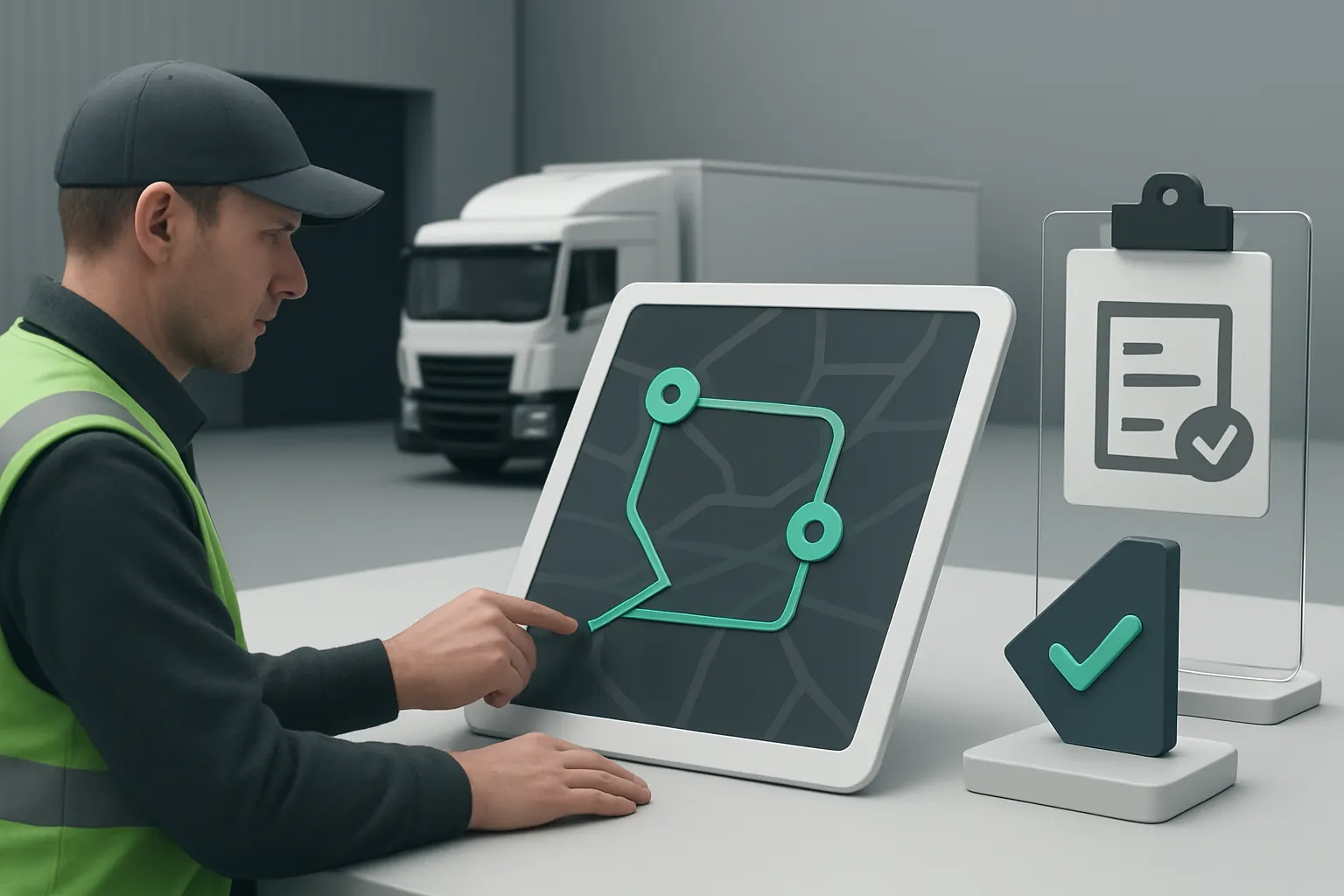
Manual or spreadsheet-based route planning struggles to consider vehicle size, customer time windows, drivers’ legal breaks, and road restrictions simultaneously.
A Single Operating System for Plan Optimisation
A connected route planning module integrates these constraints and updates live with booking changes. This cuts wasted mileage, reduces fuel costs, and respects drivers’ legal duty limits.
Effective Integration Touchpoints
- Legacy fleet telematics feed real-time vehicle location and status into the system.
- DVSA compliance tools verify tachograph hours and alert planning exceptions.
- External mapping and traffic APIs, like Google or HERE maps, enhance routing accuracy.
Concrete Scenario
An operator reroutes a delivery due to traffic congestion notified by real-time integration. The rota updates automatically, and the driver receives revised instructions via the app, avoiding delays and fines.
Checks and Balances
The system applies deterministic routing rules but allows human dispatchers to adjust plans. Any override requires justification logged in the platform. Exceptions for load consolidations trigger manual approval to manage risk.
Integrated Driver Compliance and Tacho Data Management
Compliance Bottlenecks in Driver Monitoring
Tachograph downloads and driver log checks often require manual handling, risking late or incomplete records that attract DVSA penalties.
Connected Compliance Within Own System
Downloading tacho data can be automated from devices and stored centrally alongside each driver’s profile. The platform matches compliance rules with driver hours and triggers alerts for breaches or missing records.
Supporting Solution Ecosystem
- Direct connections to tacho download devices reduce manual steps.
- HR and payroll systems linked enhance driver availability forecasts and wage calculations.
Practical Outcome
A haulier automates tacho capture overnight. The system prompts schedulers only if drivers near hour limits, enabling proactive rota changes.
Control Features
Compliance reports are generated automatically but require review and sign-off. Notifications escalate to management on critical non-compliance risks while retaining human accountability.

Digitised Document Capture and Proof of Delivery Integration
Proof-of-Delivery Delays and Errors
Physical signatures and paper PODs cause slow billing cycles and disputes, especially when paperwork gets lost or delayed.
One Owned Record for Job Completion
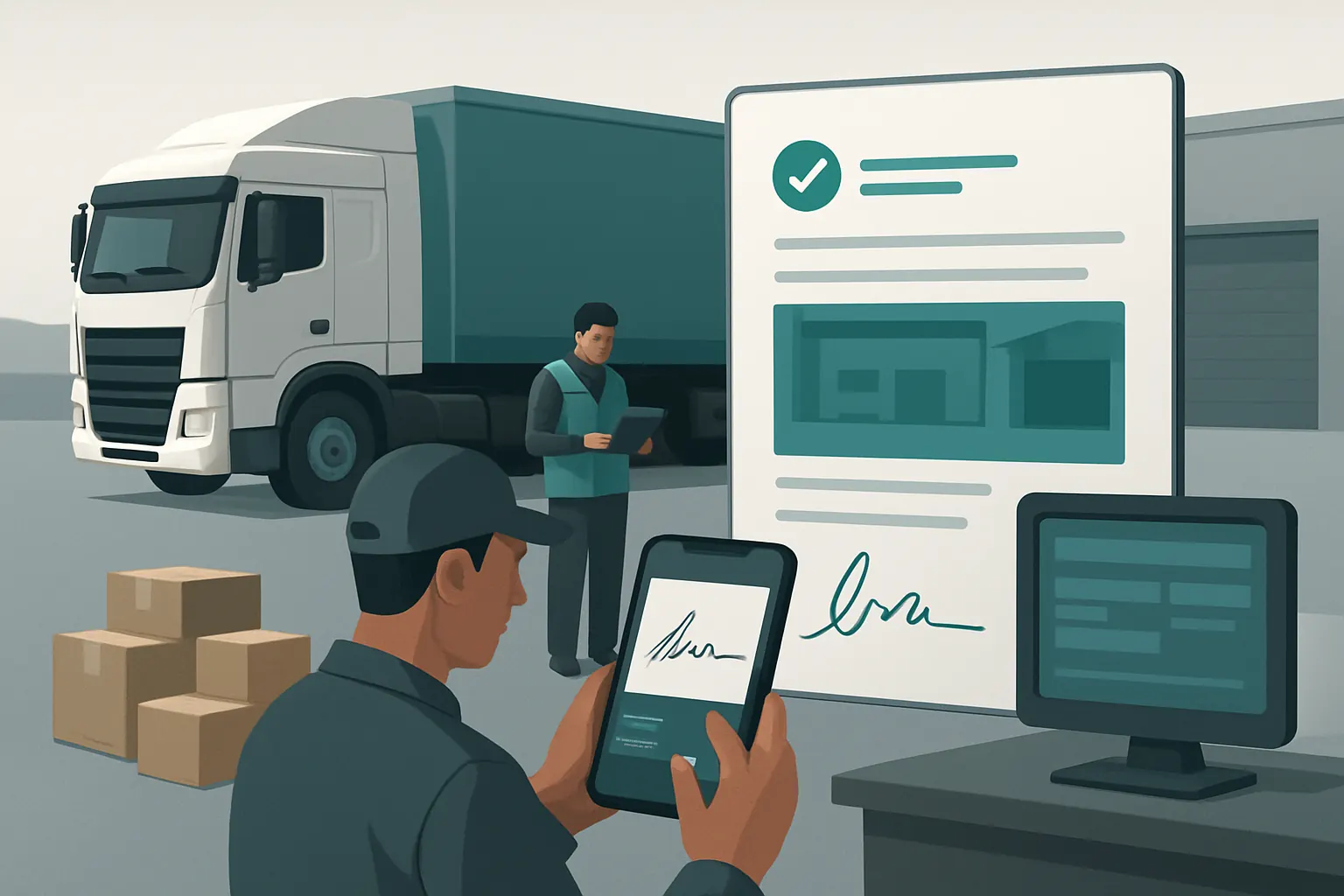
An integrated capture module collects electronic signatures and photos directly from drivers’ mobile apps. This data populates each booking record and triggers dispatch workflows for invoicing and exception handling.
Useful Connectivity
- Mobile device camera APIs enable instant upload of POD photos.
- Accounting and invoicing systems integrate for automated billing post-POD confirmation.
Real-Life Efficiency Gains
Automatic POD reduces invoice disputes. One haulier trimmed invoice turnaround time from weeks to days, improving cashflow and customer satisfaction.
Oversight and Integrity
Driver app access is secured by multi-factor authentication. All POD entries are timestamped with location data to ensure chain of custody integrity.
Exception Handling and Delay Alerts with Human-in-the-Loop Workflow
Operational Disruptions and Communication Gaps
Unexpected vehicle breakdowns or delays cause customer service issues if updates and remedial plans are slow or fragmented.
Event-Driven Alerts Within Managed Workflow
Exceptions detected by the system—such as late arrivals flagged by telematics—trigger alerts to schedulers and clients. Pre-configured workflows route these alerts for human review and action.
Specialist Integrations
- SMS gateways like Twilio for automated customer notifications.
- Breakdown service providers integrated for rapid dispatch.
Scenario in Action
A driver’s vehicle has a fault en route. The system alerts operations, automatically triggers booking rescheduling, and sends an SMS update to the recipient—all logged in one workspace.
Control Mechanisms
Alerts may be auto-triggered but must pass through dispatcher approval before customer communication. Escalation paths ensure consistent management of serious disruptions.

Real-Time Dashboard Bringing Operational Data to One Screen
Fragmented Data Hinders Decision-Making
Managers monitoring multiple spreadsheets and systems lack an up-to-date consolidated view of fleet status, driver availability, and financial KPIs.
Custom Dashboard Reflecting Business Priorities
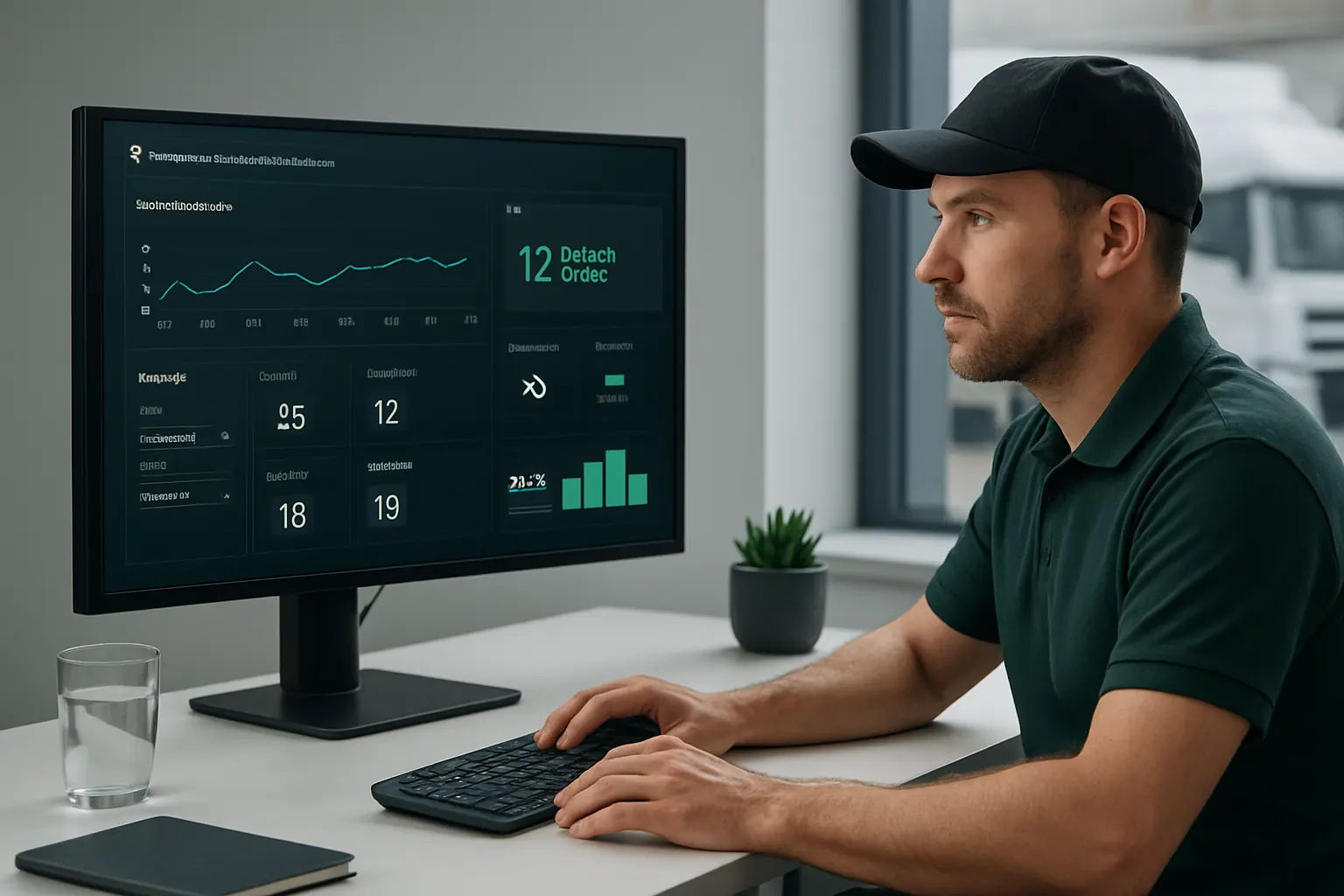
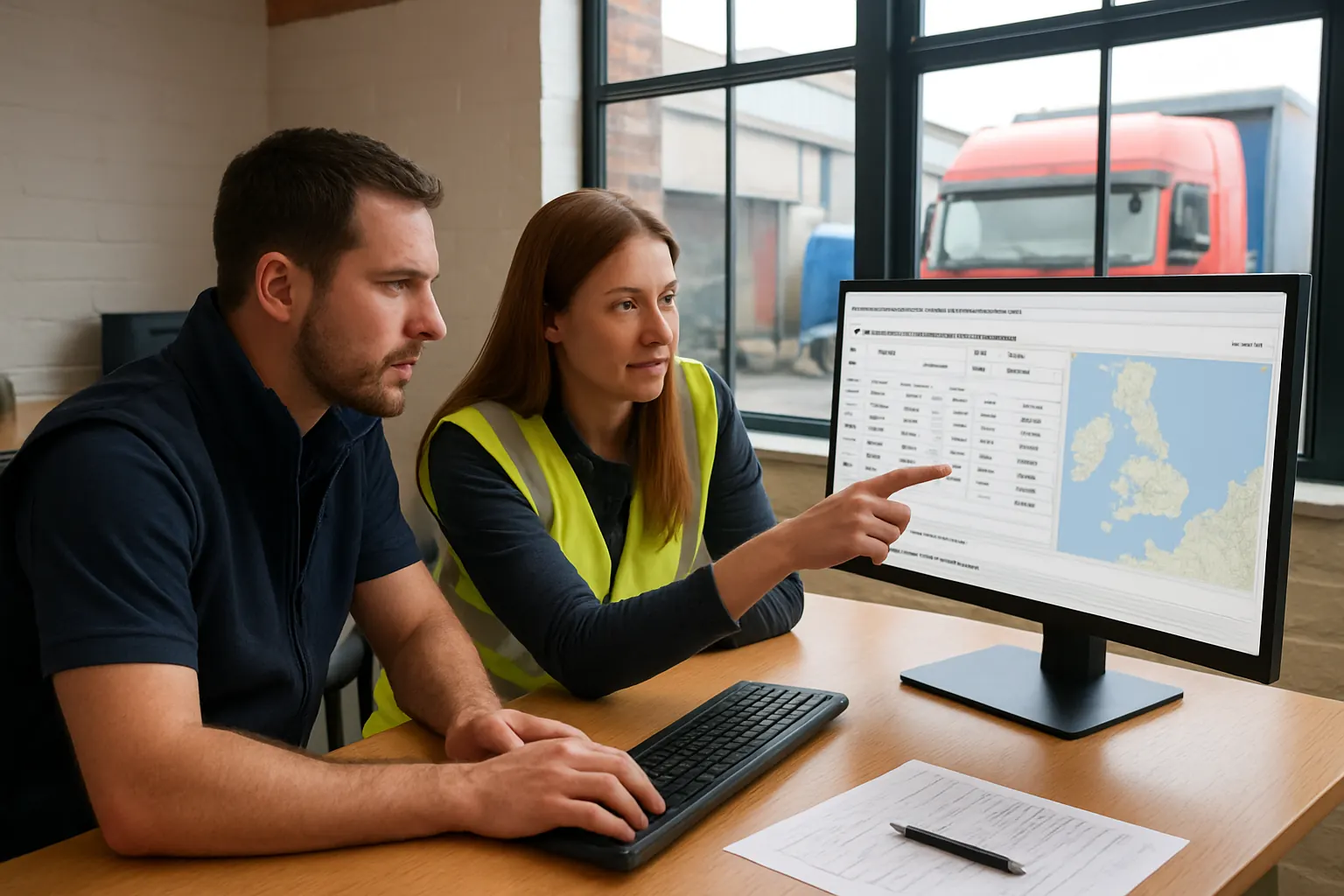
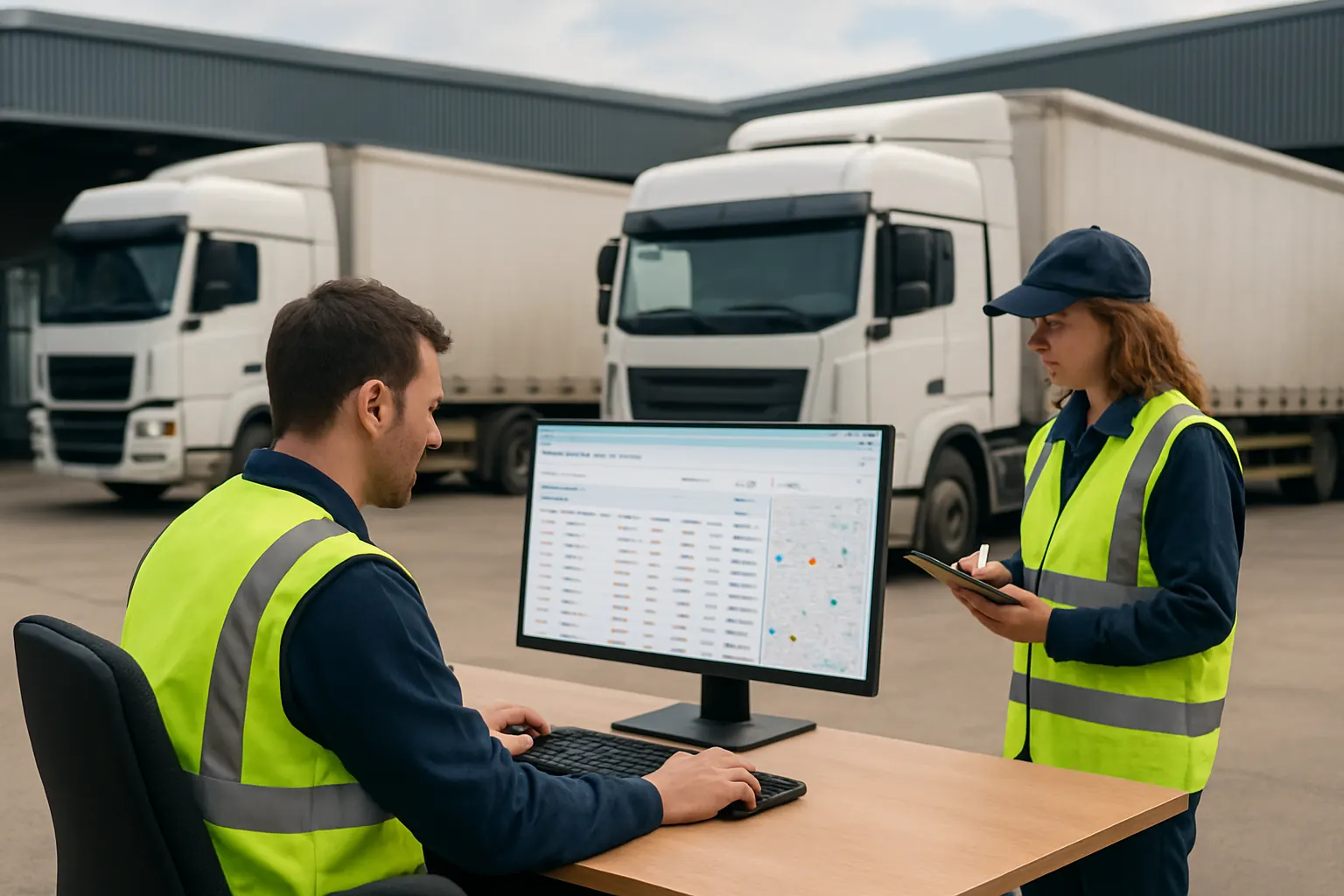
An owned dashboard connects booking, rota, compliance, and invoicing data in real time. It supports decision-making by showing delayed orders, resource utilisation, exceptions, and cashflow forecasts.
Integration Note
The dashboard pulls data internally and from connected third-party services where relevant, offering tailored views for each role.
Concrete Manager Benefit
A dispatcher views an at-a-glance rota with delay alerts and compliance statuses, allowing swift reallocation of jobs and mitigating risk.
Governance Approach
Access to dashboard data is role-based. Financial and compliance information requires multi-level approval before changes or manual entries occur.
Owned Modules Replacing Duplicate SaaS Subscriptions
Costly Overlap in Uncoordinated Software
Many hauliers subscribe to multiple route planning, driver management, and document storage tools that do not integrate, paying repeatedly for overlapping features.
Consolidation into a Single Owned System
By developing tailored owned modules for core activities—planning, compliance, document management—the business eliminates redundant spending and risks of data fragmentation.
Selective Use of External Specialists
Only specialist services like payments or communications are kept as integrated SaaS to ensure ongoing innovation and security.
Example
A firm cancels external route optimisation and document storage services after implementing owned equivalents connected to their central workflow, reducing monthly IT costs.
Control Environment
Modules are configurable to evolving business needs. Subscription decisions for external tools are reviewed periodically to balance cost and function.
Selective AI Capabilities Supporting Variable Workflows
Misconception: AI Should Replace All Decision-Making
In road haulage, predictable tasks benefit from deterministic automation rules. AI is better deployed selectively for variable jobs such as classification, summarisation, prioritisation, and complex decision support.
Tailored AI Assistance Within Workflows
For example, AI models can classify incoming order types for routing priority, summarise driver logs for quick review, or suggest optimal loads when unusual exceptions occur.
Integration Examples
- Natural language processing to summarise customer instructions.
- Machine learning models to prioritise delays requiring human action.
Tangible Benefit Scenario
An AI summarisation feature flags high-risk late delivery cases, allowing dispatchers to focus on exceptions rather than routine monitoring.
Risk Management Controls
All AI outputs remain advisory with manual approval required for all critical operational decisions, preserving compliance and human oversight.
90-Day Rollout Plan to Transform Haulier Operations
Weeks 1–2: Assessment and Prioritisation
- Map current systems and workflows.
- Identify key manual pain points.
- Define initial automation targets connected to bookings and planning.
- Engage stakeholders for process mapping and role allocation.
Weeks 3–6: Development and Internal Integration
- Build and configure the owned booking and rota modules.
- Establish integrations with telematics, tacho, and existing driver management systems.
- Initiate API connections with specialist payment and communications providers.
- Pilot selective AI models on non-critical workflows.
Weeks 7–12: Live Deployment and Optimisation
- Roll out end-to-end workflows from order capture through proof of delivery.
- Enable dashboard access tailored by role.
- Introduce compliance and exception alerting workflows.
- Train staff on new tools and controls.
- Monitor performance and adjust configuration for continuous improvement.
Connecting, Replacing, and Automating with AI Implementation UK
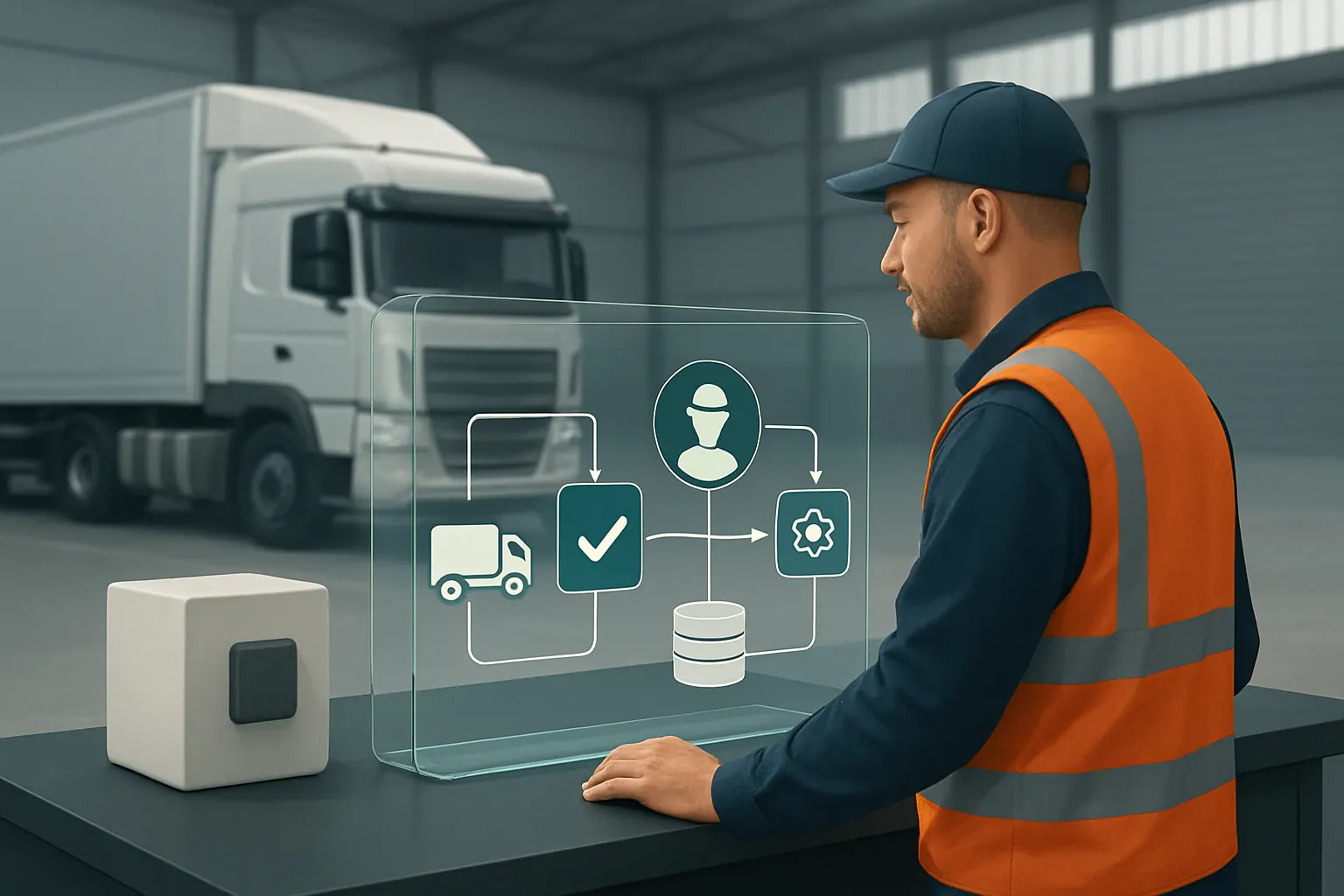
Road-haulage operators face distinct challenges in orchestrating vehicle and driver planning with operational certainty. AI Implementation UK offers a single tailored connected operating system that your business owns—designed and configured specifically around how your haulier works.
We enable you to keep your valuable existing tools and data but connect them seamlessly to streamline the order to dispatch workflow. Our approach replaces costly software subscriptions with owned modules where integration and control deliver real value. Your operational data converges into reliable records and dashboards that empower timely, well-governed decisions.
AI is incorporated selectively to assist with complex variable workflows such as classification, prioritisation, and summary tasks—never replacing vital human approvals. Our deterministic rule engines handle routine predictable operations, preserving compliance rigor and human accountability.
Explore how we can help you design, build, and roll out your bespoke vehicle and driver planning system in 90 days for measurable operational and financial benefit. Learn more about our holistic approach to process automation and RPA and data infrastructure preparation tailored for road haulage.
At each step, your business retains ownership and control of the system, ensuring data security, privacy, and compliance aligned with UK regulatory expectations, supported by best practices from the Information Commissioner’s Office and National Cyber Security Centre. For payments, we integrate secure, PCI-compliant gateways to safeguard customer transactions responsibly.
Instead of a patchwork of disconnected SaaS, a connected, intelligent, and owned operating environment transforms your vehicle and driver planning into a competitive advantage.
For tailored advice or to discuss a free consultation on your roadmap, visit AI Implementation UK’s platform planning service today.
To turn these priorities into one coherent system, map the platform your business needs or explore our workflow automation approach.